Many people believe braces or aligners are mainly used to improve appearance. In reality, treatments such as Invisalign treatment and traditional braces also play an important role in overall oral and facial health. Orthodontic treatment affects occlusion (which means how the upper and lower teeth come together when the mouth closes), facial balance, and airway dimensions, which may influence breathing patterns and facial development. Because these systems are closely connected, orthodontic treatment requires right diagnosis, right treatment planning and regular monitoring. This is why the role of an experienced orthodontist in Invisalign treatment and braces treatment is essential to ensure safe tooth movement, proper bite alignment and stable long-term results.
Understanding the Biological Complexity of Tooth Movement
Orthodontic treatment works by applying controlled forces to teeth so they gradually move through the jawbone. Although the process appears simple from the outside, it involves complex biological changes inside the bone and surrounding tissues.
Bone Remodelling Process
When gentle pressure is applied to a tooth, the surrounding bone begins a process called bone remodelling (which means the natural process where bone breaks down and rebuilds to allow teeth to move). This means bone is resorbed on one side of the tooth and rebuilt on the other side so the tooth can move to a new position.
Controlled Force Systems
Orthodontists carefully control the amount of pressure placed on teeth. If the force is too strong or poorly directed, it may damage the roots or surrounding tissues.
Anchorage Planning
Anchorage refers to using certain teeth as stable support points while other teeth move. Proper anchorage control ensures that movement occurs only where it is intended.
Root Positioning vs Crown Alignment
The visible portion of a tooth is called the crown, while the portion inside the bone is called the root. Right orthodontic treatment aligns both the crown and the root. Aligning only the visible part may look correct initially but can lead to instability later.
Role of an Experienced Orthodontist in Braces Treatment
Traditional braces is one of the most reliable methods for correcting complex orthodontic problems. However, successful treatment requires significant clinical expertise of an experienced orthodontist in braces treatment.
1.Diagnosis Beyond Crowding
Orthodontic evaluation involves more than identifying crowded teeth. The orthodontist must determine whether the issue is skeletal malocclusion (which means improper alignment of teeth or incorrect relationship between the upper and lower jaws) or dental malocclusion. In younger patients, growth assessment helps predict how the jaws will develop. Orthodontists also analyse the facial profile and the vertical dimension, which refers to the vertical relationship between the upper and lower jaws when the mouth closes.
2. Bracket Positioning and Prescription Selection
Braces use small attachments called brackets bonded to each tooth. Their exact placement guides tooth movement. Orthodontists control torque, the angle of the tooth root inside the bone, and in-out positioning, which determines how far a tooth moves forward or backward. These adjustments are customised based on case complexity.
3. Wire Sequencing and Force Control
Braces use thin metal wires called arch wires that are changed in stages. Orthodontists follow a planned sequence to move teeth gradually while controlling force levels. Proper force management helps avoid root damage and allows effective anchorage, meaning some teeth remain stable while others move.
4. Complex Case Handling
Experienced orthodontists manage challenging cases such as severe tooth rotations, impacted teeth trapped beneath the gums, facial asymmetry or cases requiring coordination with jaw surgery.
5. Managing Complications
During treatment, orthodontists monitor for complications such as root resorption (which means shortening or loss of tooth root structure during orthodontic treatment) or appliance breakages. If teeth do not move as expected, the treatment plan may need modification.
Experience Required in Braces Treatment
Successful braces treatment requires:
● Advanced understanding of orthodontic biomechanics
● Years of hands-on clinical experience
● Exposure to complex malocclusion cases
● Ability to judge and adjust treatment plans during the course of treatment
Role of an Experienced Orthodontist in Invisalign Treatment
Clear aligners may appear simple, but Invisalign treatment requires years of experience as an orthodontist to select the right case, to do digital planning and also orthodontic expertise in complex cases. In aligners the orthodontist remains fully in control of, and responsible for, his or her treatment decisions. This includes designing a suitable treatment plan (including the predicted tooth movements) and prescribing a series of customised Invisalign aligners specifically to match a particular patient’s treatment plan.
1. Digital Treatment Planning
Invisalign treatment begins with a digital 3D simulation of tooth movement. An experienced orthodontist evaluates this plan by interpreting the simulation, identifying unrealistic movements, planning safe staging sequences and predicting root positioning. Careful analysis ensures that tooth movement remains biologically safe and predictable.
2. Attachment Design and Placement Strategy
Attachments are small tooth-coloured shapes bonded to specific teeth to improve aligner grip. The orthodontist determines where attachments should be placed and how they guide force direction. Proper placement helps control complex movements and prevents aligner slippage during treatment.
3. IPR (Interproximal Reduction) Judgement
In cases of crowding, IPR (which means a controlled procedure where a small amount of enamel is reduced between teeth to create space) may be performed to create space between teeth. The orthodontist carefully decides when IPR is needed, how much enamel can be safely reduced and how it will affect long-term alignment stability.
4. Refinement Strategy
Some cases require refinement aligners after the initial treatment phase. An experienced orthodontist can identify incomplete corrections and modify the treatment plan to achieve the desired alignment without unnecessarily prolonging treatment.
5. Case Selection
Not every orthodontic case is suitable for aligner-only treatment. An orthodontist evaluates whether aligners will be effective, when braces may be more appropriate or when a hybrid approach combining different orthodontic techniques is required. Some cases may require a combination of braces and aligners also.
Successful Invisalign treatment requires:
● Advanced expertise in orthodontic treatment planning and aligner digital planning
● Strong understanding and good experience of aligner biomechanics (which means the science of how aligners apply forces to move teeth safely and effectively)
● Recognised professional training from Invisalign and preferably faculty-level exposure
● Considerable clinical experience in managing different aligner cases in numbers and complexity
● Ability to manage and correct the limitations of aligner treatment
Long-Term Stability and Retention
Orthodontic success is not defined by how quickly teeth move but by how stable the results remain.
● Root Parallelism
Teeth should finish with roots positioned parallel to each other to ensure long-term stability.
● Occlusal Settling
Occlusal settling refers to the natural adjustment of teeth after treatment so the bite fits comfortably.
● Functional Bite
A functional bite allows efficient chewing without strain on teeth or jaw joints.
● Retainers
After treatment, patients wear retainers to maintain tooth positions.
● Monitoring Relapse
Relapse occurs when teeth gradually move back toward their original positions. Regular follow-up helps prevent this.
Clinical Experience: What Patients Should Consider
When choosing an orthodontist, patients should evaluate clinical experience carefully. Important factors include:
● Years of specialised orthodontic experience
● Experience with complex cases is a must
● Academic contributions and research involvement in orthodontic field
● Global professional affiliations are a big plus,
● Invitations to speak at orthodontic conferences reflects the expertise
● Exposure to surgical orthodontic cases
● Ability to diagnose correctly and manage multidisciplinary treatments
Why Choose Dr Tapasya Kapoor for Braces and Invisalign Treatment
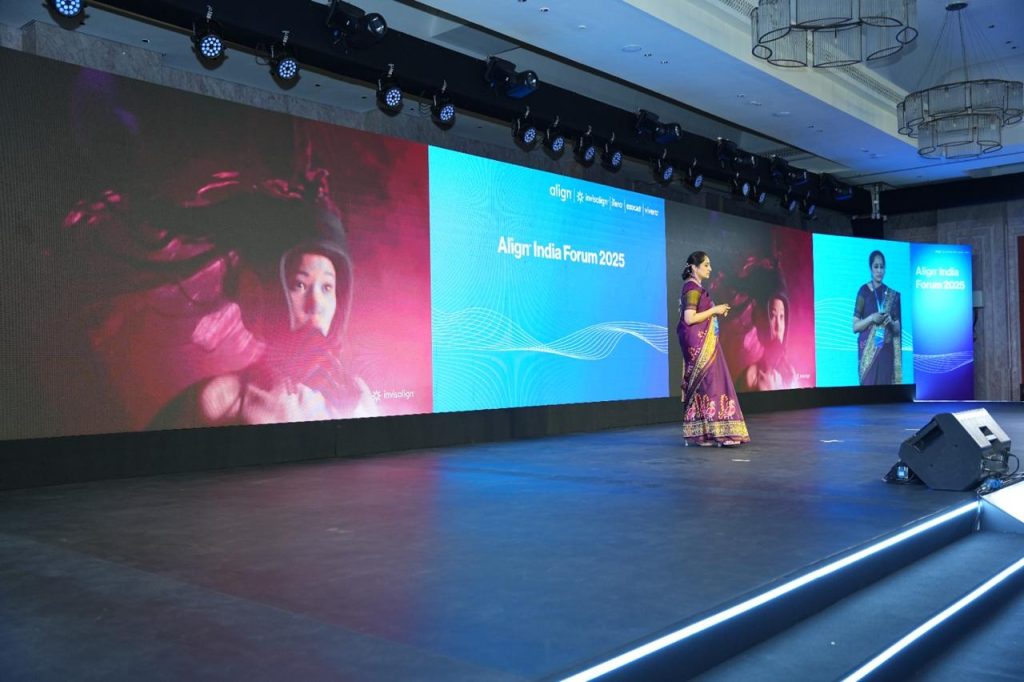
Dr Tapasya Kapoor brings over 24 years of clinical experience, guided by a “right diagnosis, right treatment philosophy” approach that ensures precise and predictable outcomes. She has treated a wide range of orthodontic cases across all age groups. As a Global Invisalign Faculty Member, she is recognised within leading orthodontic networks across India and internationally. Her expertise includes managing complex cases such as surgical orthodontics, impacted teeth and skeletal discrepancies. An invited speaker at leading forums, she combines clinical excellence with a patient-centred approach focused on personalised planning and long-term results
Awards & Honors
- Invisalign Diamond Provider (2022–2024): Recognition for managing a high volume of successful Invisalign cases.
- Invisalign Lifetime Achievement Award (2022): Awarded for exceptional experience and contributions to Invisalign treatment.
- Invisalign Platinum Elite Provider (2019–2021): Held this top-tier provider status for consistent clinical excellence.
- Platinum Provider Plaque – Invisalign South Asia Forum, Singapore (2018): Acknowledged for outstanding contributions in the region.
Key Accomplishments
- Pioneer in Invisalign Training: Trained over 900 orthodontists across India as one of the earliest certified providers.
- Extensive Clinical Expertise: Treated 1000+ Invisalign cases and completed over 12,976 braces cases.
- Educational Leadership: Served as Professor of Orthodontics for 14+ years in Delhi NCR.
- International Practice: 12 years of experience as a visiting consultant orthodontist in Dubai.
- Publications & Media: Authored a white paper (2018) on Invisalign treatment; featured in Cosmopolitan and radio shows.
- Global Recognition: 8 cases featured in the Align Global Gallery.
Conclusion – Orthodontic Success Is Determined by Clinical Judgement
Orthodontic treatment involves much more than choosing braces or aligners. The orthodontist’s experience, treatment planning expertise and clinical judgement determine treatment safety, facial outcomes and long-term stability. Orthodontics is a specialised field that requires years of training and hands-on experience. For individuals considering Invisalign treatment in Gurugram or orthodontic braces treatment, choosing an experienced orthodontist plays a crucial role in achieving predictable and lasting results. Patients may consider consulting a qualified orthodontic specialist to understand the most appropriate treatment approach for their individual needs.