Invisalign has revolutionized modern orthodontics by providing a clear and highly effective alternative to traditional braces. Clinically, it is an advanced orthodontic system that aligns teeth through controlled orthodontic forces. Orthodontic forces trigger bone remodeling around the periodontal ligament(the tissue that connects the tooth to the surrounding bone), allowing teeth to gradually move into a new position, where the bone reshapes to support the new tooth position. Because of this biological process, treatment must be carefully planned, as improper orthodontic forces may increase the risk of root resorption and compromise bite stability and long-term results. Despite this, many patients believe the aligner brand determines success. In reality, successful treatment depends more on the orthodontist’s diagnosis, treatment planning and careful supervision. With the growing availability of aligner treatments in India, many clinics now offer Invisalign. However, availability does not guarantee equal expertise. Choosing an experienced Invisalign orthodontist or specialist therefore plays the most important role in ensuring safe, precise and stable treatment results.
How Invisalign Treatment Is Planned: Diagnosis, Tooth Movement and Bite Analysis
Patients are often introduced to Invisalign through digital smile simulations that illustrate how their teeth may appear after treatment. These visuals help patients understand the possible results, but the actual treatment depends on careful diagnosis and clinical planning.
Comprehensive Diagnostic Records
Effective Invisalign treatment begins with a detailed diagnostic assessment that typically includes:
• Clinical examination
• Digital intraoral scans
• Clinical photographs
• Radiographic imaging such as panoramic and cephalometric X-rays(a specialised side-view X-ray used to analyse jaw relationships)
These records allow the orthodontist to evaluate tooth position, bone support, jaw relationships and overall oral health.
Occlusal Analysis
A key part of orthodontic planning involves analysing occlusion (which means how the upper and lower teeth interact during biting and chewing).
Important factors include:
● Overbite – (which means the vertical overlap of the upper front teeth over the lower front teeth)
● Overjet – (which means the horizontal distance between the upper and lower front teeth)
● Crossbite relationships – (which means the upper teeth bite inside the lower teeth instead of outside)
● Midline discrepancies – (which means the centre line of the upper and lower teeth do not align)
● Dental symmetry – (which means balanced alignment of teeth on both sides of the dental arch)
These elements influence both aesthetics and functional bite stability.
Planning Tooth Movement in Stages
Invisalign works through a sequence of aligners that guide teeth through incremental stages of movement. Each aligner is designed to move specific teeth by small and controlled amounts.
The orthodontist determines the sequence of tooth movements based on:
● Controlled tooth movement – Using carefully planned forces to move teeth safely and gradually into proper alignment.
● Biological limits of tooth movement – Understanding how far and how quickly teeth can move without harming surrounding bone and tissues.
● Overall treatment objectives – Planning tooth movement to achieve proper alignment, bite function and long-term stability
Attachments for Controlled Force Application
Many Invisalign treatments require attachments, which are small tooth-coloured shapes bonded to specific teeth. These attachments help the aligners grip the teeth more effectively and allow the application of precise directional forces.
Without attachments, movements such as tooth rotations or vertical positioning may be difficult for aligners to achieve.
Interproximal Reduction (IPR)
In cases where teeth are crowded, orthodontists may perform Interproximal Reduction (IPR) (which means removing a very small amount of enamel between selected teeth to create space for alignment).
IPR can help:
• Resolve crowding
• Improve tooth proportions
• Allow controlled alignment without excessive arch expansion
Bite Ramps, Elastics and Auxiliaries
Certain bite conditions require additional support.
Invisalign treatment may therefore include:
● Bite ramps for deep bite correction (which help reduce excessive overlap of the front teeth)
● Elastics to improve bite relationships (small rubber bands used to guide how upper and lower teeth fit together)
● Auxiliary appliances for complex movements (additional orthodontic tools used to help move teeth in difficult cases)
These additions demonstrate that Invisalign therapy often involves more than simply wearing clear trays.
Refinement Phases
Many moderate and complex cases require refinement aligners after the initial treatment phase. Refinements allow orthodontists to adjust movements that did not fully express during the first sequence.
This step is common because the body’s response to orthodontic forces can vary between patients
Retention Planning
Orthodontic stability requires long-term retention. Teeth naturally attempt to return to their original positions, so retention planning begins before treatment even starts.
Retainers help maintain the corrected tooth positions and protect the results achieved during treatment.
Key Factors in Choosing an Invisalign Provider
Selecting an Invisalign provider should involve careful evaluation of several clinical factors. Understanding these criteria allows patients to make informed decisions about their orthodontic care.
Specialist Orthodontic Qualification
One of the most important considerations is the provider’s training. While general dentists may offer aligner treatment after certification courses, a specialist orthodontist completes postgraduate training such as MDS Orthodontics. Since aligners operate on the same orthodontic principles as braces, specialist training supports safer and more predictable treatment planning.
Clinical Experience Beyond Simple Alignment
Clinical experience strongly influences treatment success. Some providers focus mainly on mild alignment concerns, while experienced orthodontists manage a wider range of conditions such as deep bites, open bites, tooth rotations, midline discrepancies and dental asymmetry. Adult orthodontic cases may also involve existing restorations or previous treatment relapse, which require careful planning and precise control of tooth movement.
Comprehensive Diagnosis Before Treatment
Effective Invisalign treatment begins with a detailed diagnostic evaluation. This typically includes a clinical examination, radiographic analysis, periodontal assessment and bite evaluation. Such analysis helps determine whether the issue is dental or skeletal. In certain cases, orthodontists may recommend combined or hybrid approaches to achieve optimal results.
Active Monitoring During Treatment
Although Invisalign aligners are removable, treatment requires continuous professional supervision. Orthodontists monitor progress through regular review appointments, evaluate biological response to tooth movement, manage aligner adjustments when needed and guide patients through the retention phase to maintain long-term stability. Aligners therefore require active clinical management rather than passive use.
Why Choosing the Right Invisalign Provider Matters Long Term
The real impact of orthodontic treatment becomes evident long after the final aligner is removed. Choosing the right provider influences several long-term factors.
Occlusal Stability
A properly planned treatment produces a balanced and functional bite, allowing teeth to interact efficiently during chewing.
Prevention of Relapse
Relapse occurs when teeth gradually shift back toward their original positions. Careful planning and effective retention strategies significantly reduce this risk.
Protection of TMJ Function
The temporomandibular joint (TMJ), the joint that connects the lower jaw to the skull, plays an important role in jaw movement and function. Orthodontic planning should maintain healthy jaw relationships and avoid bite discrepancies that may place unnecessary strain on the temporomandibular joint.
Root and Periodontal Health
Excessive orthodontic forces can affect tooth roots and supporting bone. Thoughtful treatment planning protects root integrity and periodontal stability (the health of the gums and supporting tissues around teeth).
Long-Term Retention Strategy
Retention protocols may include fixed or removable retainers, based on the complexity of the original orthodontic problem.
Invisalign treatment is considered successful when results remain stable long after treatment is completed.
Why Choose Dr Tapasya for Invisalign Treatment
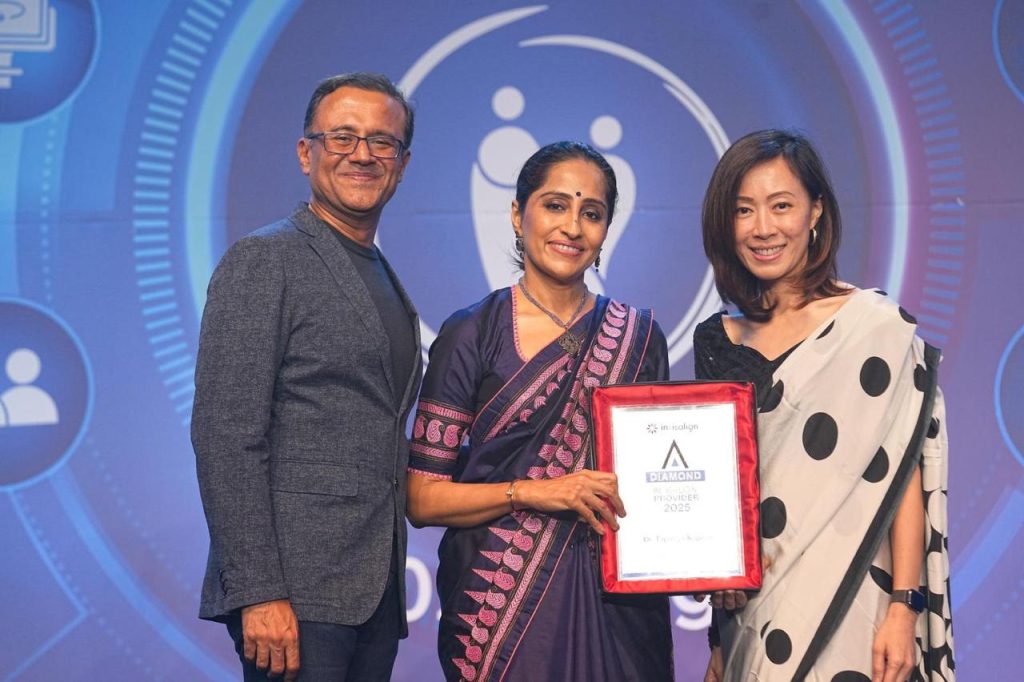
Choosing the right orthodontist is essential for successful Invisalign treatment. Dr Tapasya Kapoor, a leading Invisalign provider in Gurugram, brings more than 24 years of dedicated orthodontic experience in treating both adolescents and adults using clear aligner therapy.
She has been a member of the Invisalign Global Faculty since 2017 and is actively involved in mentoring orthodontists and contributing to national and international orthodontic professional education within the global Invisalign community. Her clinical expertise includes advanced orthodontic diagnosis, digital orthodontic planning and the use of modern aligner protocols to achieve predictable treatment outcomes.
Dr Tapasya is also among a select group of orthodontists involved in pilot projects for emerging Invisalign technologies, contributing to the advancement of digital orthodontic treatment. Several of her Invisalign treatment cases have been featured in the Align Global Gallery, reflecting the quality and precision of her clinical work.
At her practice, Invisalign treatment is guided by careful diagnosis, personalised treatment planning and continuous clinical supervision throughout the treatment journey. Each case is evaluated individually to ensure that the aligner therapy is tailored to the patient’s specific orthodontic needs.
Over the years, patients from across India have placed their trust in her practice for ethical orthodontic care, clinical precision and long-term treatment stability.
Conclusion – Expertise Is the Deciding Factor
Invisalign has transformed modern orthodontic care by offering a discreet and comfortable method for correcting dental alignment. However, the aligner system itself does not determine treatment success. Several clinical factors influence the final result:
• Diagnosis determines direction
• Experience determines precision
• Monitoring determines stability
The success of Invisalign treatment ultimately depends on the clinician’s expertise. The orthodontist’s expertise in diagnosis, biomechanics and long-term stability plays a critical role in achieving safe and predictable outcomes. For patients considering aligner treatment, the most important step is scheduling a comprehensive orthodontic evaluation rather than simply seeking aligners. Choosing an experienced orthodontic specialist protects both aesthetic results and long-term oral health.